
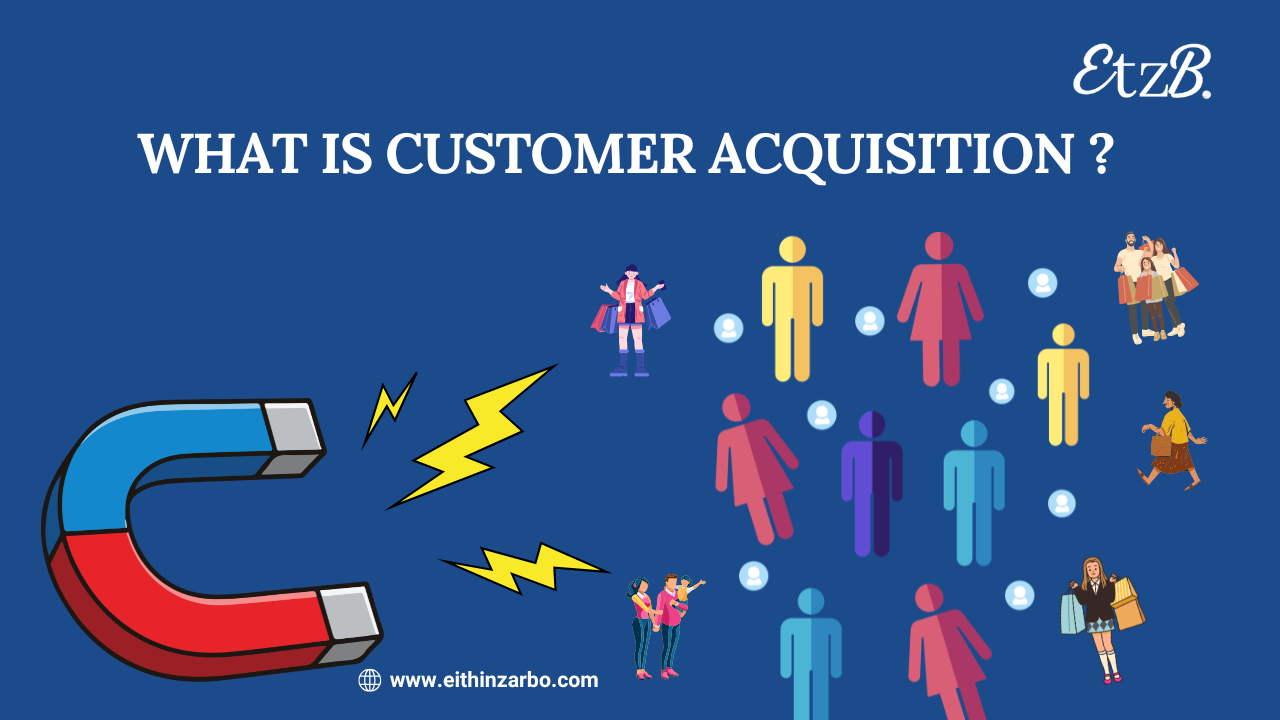
Customer acquisition is the process of bringing new customers into your business, but I want to separate two things that often get blurred together: acquisition as a process and acquisition as a metric. Both matter, but confusing them leads to incomplete thinking.
Understanding Customer Acquisition
As a process, customer acquisition covers every deliberate effort a business makes to move a potential customer from awareness to a first transaction. It includes the channels you use, the messages you send, the offers you design, and the experience someone has before they decide to become a customer. It is not a single campaign or a single moment. It is a system.
As a metric, acquisition is most commonly measured through Customer Acquisition Cost, or CAC. This tells you how much your business spends, on average, to bring in one new customer. The calculation is straightforward: divide total acquisition spend by the number of new customers acquired in a given period. What makes CAC genuinely useful is not the number itself but what you compare it against. When Customer Lifetime Value (CLV) significantly outpaces CAC, you have a sustainable model. When it does not, something in the acquisition system needs to change.
Understanding the difference between these two dimensions process and metric is what allows marketers to diagnose problems correctly. A high CAC might be a channel problem, a messaging problem, or a targeting problem. You cannot fix it without first understanding where in the process the inefficiency lives.
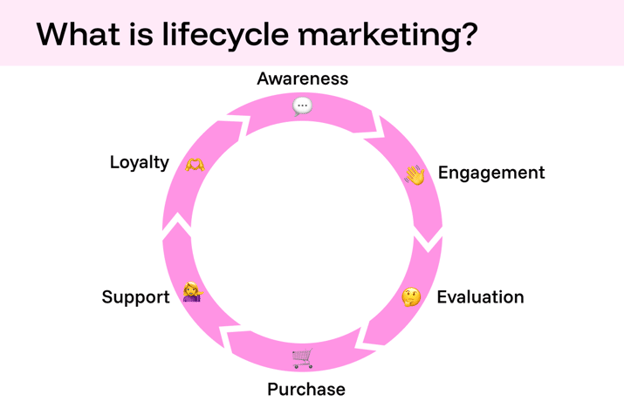
What also makes acquisition worth examining carefully is where it sits within the broader customer lifecycle. It is the entry point for everything that follows. Engagement, retention, and loyalty all depend on the quality of customers you bring in at this stage. Acquiring the wrong audience, or attracting users through channels with poor intent signals, creates downstream problems that are far more expensive to correct later than to avoid in the first place.
Customer acquisition is about attracting the right audience and converting them into customers through data-driven marketing strategies. Digital marketing and social media marketing effective to increase brand awareness, reach targeted audiences, generate qualified leads, and optimize every stage of the customer journey. By combining paid advertising, content marketing, SEO, social media campaigns, and performance analytics, help businesses acquire customers more efficiently while maximizing marketing ROI.
The Importance of Customer Acquisition
Every business needs new customers. Even organizations with strong retention eventually experience natural churn, so acquisition is not optional. But beyond simply replacing who leaves, acquisition is how businesses grow market share, enter new segments, and expand revenue in a meaningful way.
From a strategic perspective, acquisition matters because it determines the composition of your customer base. A business that consistently brings in high-value, well-matched customers through intentional channels will always outperform one that chases volume without considering fit. More users mean nothing if they do not stay, spend, or engage.
There is also a compounding effect that comes from doing acquisition well. Customers who arrive through the right channels, with accurate expectations about the product, tend to engage more deeply and stay longer. They leave reviews, refer friends, and contribute to organic growth. In that sense, acquisition and retention are not separate investments. They are deeply connected, and the quality of one directly shapes the performance of the other.
For businesses in active growth phases, acquisition often absorbs a large share of the marketing budget. That is not inherently wrong, but it requires discipline. Spending heavily on acquisition without tracking cost efficiency, audience quality, or downstream behavior produces growth that looks strong on paper but does not reflect actual business health. Understanding why acquisition matters goes beyond justifying the spend. It means knowing what you are trying to build with it.
Common Customer Acquisition Channels
There is no single channel that works for every business. What works depends on your audience, your product, your budget, and your stage of growth. Below are the channels I encounter and work with most often, each with its own strengths, trade-offs, and ideal conditions.
SEO
Search engine optimization is one of the few acquisition channels that genuinely compounds over time. When done well, SEO brings in users who are actively searching for something your product or service solves. That search intent makes organic traffic some of the highest quality available, because the user has already expressed a need before they arrive.
The honest challenge with SEO is that it takes time to build. It is not a channel for businesses that need results in the next thirty days. But at scale, it is extremely cost-efficient.
A well-optimized piece of content or a properly structured landing page can continue bringing in visitors for months or years without additional spend. For businesses willing to invest in content quality and technical structure, SEO creates a foundation that paid channels simply cannot replicate.
Looking to improve your website’s search rankings and attract more organic traffic? Discover my SEO Services to learn how a strategic SEO approach can help your business reach the right audience and achieve sustainable growth.
Social Media Marketing
Social media gives brands the ability to build awareness at scale and reach audiences who may not yet know they need what you offer. Platforms like Facebook, Instagram, TikTok, and LinkedIn each attract different user behaviors and require different content formats and tones to be effective.
Organic social builds presence and community over time. Paid social enables precise audience targeting and faster action. In many markets, including Myanmar, social media is the dominant discovery channel, which makes it a near-universal priority in any acquisition strategy. People encounter brands through their feeds before they ever search for them.
What makes social media especially effective for acquisition is its ability to combine storytelling with targeting precision. You can reach a new audience segment while simultaneously shaping their first impression of your brand. That initial perception carries forward into every subsequent touchpoint.
Want to grow your brand on social media? Find out more about my Social Media Marketing Services to discover how strategic content and campaigns can help you reach and engage your ideal audience.
Performance Marketing
Performance marketing refers to paid advertising where you pay for measurable outcomes clicks, app installs, leads, or purchases. Google Ads, Meta Ads, and programmatic display all fall under this category.
What I value about performance marketing is its speed and transparency. You can launch a campaign, see results quickly, and get clear signals about what is and is not working. It also offers granular control over targeting, budget pacing, and optimization goals, which makes it easier to manage efficiency at scale.
The trade-off is dependency. Performance marketing stops delivering the moment you stop funding it. It builds no long-term equity in the way content or SEO does. That said, for businesses that need to acquire customers quickly, test new market segments, or hit short-term growth targets, it remains one of the most practical and controllable channels available.
Referral Marketing
Referral marketing encourages existing customers to recommend a product or service to friends, family, or colleagues. Because people tend to trust recommendations from someone they know, referral programs often generate highly qualified leads and stronger conversion rates than many traditional marketing channels.
An effective referral program goes beyond offering a simple reward. It should include clear incentives for both the referrer and the new customer, an easy sharing process, transparent reward tracking, and timely referral prompts after a positive customer experience.
Many successful companies, including Dropbox, Uber, and Airbnb, have used referral marketing to accelerate customer acquisition. When combined with excellent customer experience and a well designed onboarding journey, referral programs can become a sustainable source of business growth.
Email Marketing
Email is often underestimated as an acquisition channel because it is more commonly associated with retention. But email plays a genuine role in acquisition, particularly through lead nurturing sequences, welcome journeys, and re-engagement campaigns targeting warm prospects who have expressed interest but not yet converted.
For businesses with existing contact lists or active lead generation funnels, email is a cost-effective way to move people through the decision process. The key is relevance to timing. Someone who just downloaded a resource needs a different message than someone who has been browsing product pages for two weeks without taking action. When email is used with that kind of behavioral awareness, it becomes a precise and measurable acquisition tool rather than a broadcast channel.
Content Marketing
Content marketing deserves its own place in any channel discussion, even though it often gets treated as an extension of SEO or social media rather than a standalone acquisition approach. In practice, it operates differently from both.
Content marketing is about creating material articles, videos, guides, case studies, user-generated content that attracts an audience by delivering genuine value rather than a direct sales message. The person who reads a useful article, watches an educational video, or shares a piece of content because it resonated with them is being acquired through trust rather than interruption.
In markets with growing digital audiences, content that addresses real questions and real frustrations tends to outperform promotional material significantly. UGC campaigns in particular have strong pull in Southeast Asian markets because they reflect real user experience and feel inherently more credible than brand-produced content. When content is mapped to the questions people ask before they buy, it becomes one of the most cost-efficient acquisition investments a business can make over time.
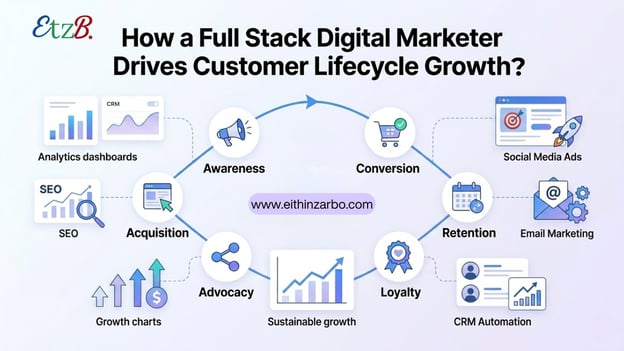
Customer acquisition is one of the primary goals of digital marketing. Businesses use channels such as SEO, social media, and paid advertising to attract qualified customers. Learn more in our guide to How a Full Stack Digital Marketer Drives Customer Lifecycle Growth?
How to Measure Customer Acquisition Effectively
Knowing which channels to use is only half the picture. Understanding whether they are working requires the right measurement framework, and for acquisition specifically, there are a handful of metrics that matter most.
Customer Acquisition Cost is the starting point. As covered earlier, it measures total spend divided by new customers acquired. Tracking CAC by channel rather than in aggregate is where real insight lives. A blended CAC number hides which channels are efficient and which are not, making it impossible to allocate budget intelligently.
Conversion Rate measures how effectively traffic or leads are turning into actual customers. A low conversion rate almost always signals friction somewhere in the user journey, whether in the landing page experience, the onboarding flow, the value proposition clarity, or the offer itself. Conversion rate optimization and acquisition strategy are closely linked because improving conversion reduces CAC without changing spend.
Cost Per Lead is relevant for businesses with longer sales cycles or multi-step funnels. It measures what you pay to generate a qualified prospect, before they become a customer, and helps evaluate the front end of your acquisition process separately from the close rate.
Return on Ad Spend, or ROAS, is most relevant for performance marketing channels. It measures revenue generated per unit of advertising spend and helps determine whether paid acquisition is financially viable at current margins.
Finally, CLV to CAC ratio gives you the most complete picture of acquisition health. A ratio of 3:1 or higher is generally considered sustainable, meaning each customer generates at least three times what it cost to acquire them. Anything significantly below that warrants a hard look at either cost reduction or retention improvement.
These metrics work best when tracked together, over time, and segmented by channel. A single snapshot tells you very little. A trend tells you where to act.
Challenges in Customer Acquisition
Acquisition is not easy, and anyone who has managed acquisition campaigns at meaningful scale will tell you the friction is real and ongoing.
Rising Marketing Costs
Advertising costs continue to increase across many digital platforms. Businesses must work harder to achieve profitable customer acquisition.
Increased Competition
Customers have more choices than ever before. Standing out in crowded markets requires strong positioning and differentiated messaging.
Longer Buying Journeys
Many customers research products extensively before making a purchase decision. This can make the acquisition process more complex and time consuming.
Changing Consumer Behavior
Customer preferences, technology, and digital trends evolve constantly. Marketers must adapt their acquisition strategies to stay relevant and competitive.
Attribution Difficulties
Customers often interact with multiple channels before converting. Understanding which touchpoints contribute most to conversions can be challenging.
Popular Customer Acquisition Campaign Examples
Many successful companies use creative campaigns to attract first time customers while encouraging existing customers to spread the word.
Referral Campaign
Referral campaigns reward existing customers for introducing new customers.
Example: Alibaba Cloud Invite & Earn Program rewards users with credits when invited friends sign up and begin using eligible cloud services. It is a classic example of referral marketing because both acquisition and customer advocacy work together.
- Dropbox giving additional storage space for successful referrals.
- Grab offering referral program to get up to $200 for you and your friends.
- Shopify get paid to referral new merchants.
Welcome Offer Campaign
Many ecommerce brands offer 10% to 20% off the first purchase in exchange for a newsletter subscription or account registration.
Limited Time Flash Sale
Brands create urgency with campaigns such as 24 Hour Sale, 11.11 Shopping Festival, or Black Friday Deals to encourage immediate purchases.
Buy One Get One Campaign
This promotion is commonly used by restaurants, fashion retailers, and beauty brands to attract first time buyers.
Free Shipping Campaign
Free shipping reduces purchase hesitation and is widely used by ecommerce businesses to increase conversion rates.
Customer Acquisition Example: Mobile Apps and Digital Services in Myanmar
Many businesses in Myanmar combine offline interactions with digital experiences to acquire new customers. This approach is especially common in industries such as banking, telecommunications, digital payments, and retail.
For example, when a customer visits a mobile service counter to apply for an eSIM, staff often guide them through downloading the company’s mobile app, creating an account, and completing the activation process during the same visit.
This assisted onboarding approach reduces barriers for first time users and helps customers become familiar with the company’s digital platform. Rather than simply completing a transaction, businesses introduce customers to an ecosystem where they can manage services, receive promotions, and continue engaging through the app.
From a customer lifecycle perspective, this single interaction supports multiple stages of the marketing funnel:
- TOFU (Top of the Funnel): The customer becomes aware of the app and its benefits.
- MOFU (Middle of the Funnel): The customer downloads the app, creates an account, and explores its features with guidance from staff.
- BOFU (Bottom of the Funnel): The customer successfully completes their first transaction or activates the service.
After the initial acquisition, businesses can strengthen customer relationships through a positive user experience, personalized communication, and well designed loyalty programs that encourage repeat engagement.
Customer Acquisition vs Customer Retention
This comparison surfaces frequently in marketing discussions, and it is worth addressing with some clarity. Acquisition and retention are not competing priorities. They are complementary parts of the same growth system, and treating them as an either/or decision usually leads to underinvesting in one at the wrong time.
Acquisition brings new customers in. Retention keeps them engaged and coming back. Without acquisition, the customer base eventually erodes through natural churn. Without retention, acquisition spend keeps climbing because you are perpetually replacing customers rather than building on a compounding base.
The real tension tends to emerge in budget allocation. Businesses that invest heavily in acquisition while neglecting retention often find themselves in a cycle where top-line growth looks reasonable but profitability suffers. Every new customer acquired costs money. If a large proportion of them leave quickly, that spend is wasted with no downstream return.
Research consistently shows that retaining an existing customer cost less than acquiring a new one, and returning customers tend to spend more, refer more, and require less support over time. A balanced approach, one that treats both acquisition and retention as connected investments rather than competing line items, produces more sustainable outcomes.
In practical terms, how to split budget between the two depends on business stage. Early-stage businesses are almost always acquisition-heavy by necessity because the customer base is too small to generate meaningful retention value. As the base grows, the proportional investment should shift toward retention and lifecycle programs, not because acquisition becomes less important, but because protecting and maximizing existing customer value becomes increasingly high-return.
A useful way to decide where to focus is to look at the CAC to CLV ratio alongside churn rate. If churn is high, fixing retention will have more immediate impact on unit economics than increasing acquisition spend. If churn is healthy but growth is slow, acquisition likely needs more investment. Looking at both numbers together gives a clearer picture of where the actual constraint is.
Acquiring customers is only the first step. Discover how businesses turn first time buyers into loyal customers in How Customer Loyalty Drives Business Growth?
Final Thoughts
Customer acquisition is foundational to any marketing strategy, but it is most effective when treated as part of a larger system rather than an isolated activity. Who you acquire, how you acquire them, and at what cost all have direct implications for everything your business does downstream, from engagement to retention to long-term revenue.
Businesses that do acquisition well are not always the ones with the largest budgets. They are the ones who understand their audience clearly, choose channels with intention, measure the right things consistently, and stay connected to what happens after the first conversion. Acquisition does not end when someone signs up. It ends when you understand whether that customer was the right one to bring in.
If you are building or refining an acquisition strategy, the most useful question to start with is not how many customers you need, but what kind of customers will actually contribute to sustainable growth. That question tends to produce sharper channel choices, better creative decisions, and more honest conversations about what the numbers are actually telling you.
Need a customer acquisition strategy that delivers measurable results? Explore my Growth Marketing Services to learn how I help businesses attract, convert, and retain customers across the entire customer lifecycle.
 Ei Thinzar Bo