
How to turn insights, tracking, and KPIs into real business decisions?
Many businesses believe they are doing marketing. They run ads, post on social media, launch campaigns, and track likes or impressions. But here is the truth. If your decisions are not backed by data, you are not doing marketing. You are guessing.
Modern marketing is no longer about creativity alone. It is about combining creativity with data, insights, and measurable outcomes. The difference between average marketers and high-performing marketers is simple:
One guesses. The other measures, learns, and optimizes.
Why Marketing Without Data Fails
Marketing without data often looks busy, but it rarely delivers results. At first glance, marketing without data does not look like failure. Campaigns are running. Content is being published. Ads are live. Reports are being shared. Everything feels active, even productive. But underneath that activity, there is a quiet problem. Nothing is truly being understood.
1. You Don’t Know What Works
Without proper tracking, marketing becomes a series of assumptions dressed up as strategy.
A campaign might look successful because it is getting attention. A post might feel effective because engagement is high. A channel might seem important simply because it is always being used.
But when you step back and ask a simple question, the answers start to disappear.
Which campaign is actually driving conversions? Which channel is bringing real business impact? Which audience is not just engaging, but buying?
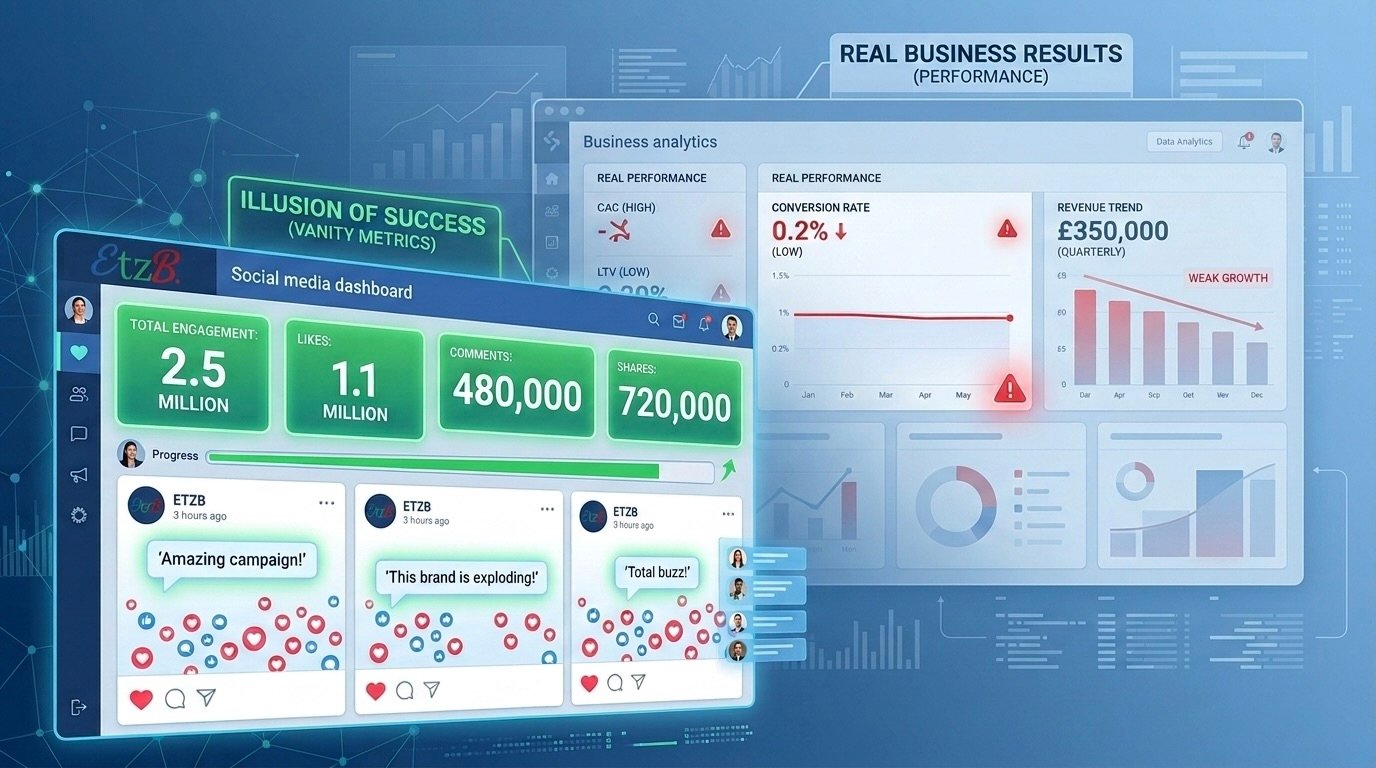
Without data, there is no clear answer. Take a typical Facebook campaign. It may generate likes, shares, and comments. It may even create the feeling that something is working. But if there is no visibility into conversions, no understanding of cost per result, and no connection to revenue, then success is only perceived, not proven.
And that is where the risk begins. Because decisions are now based on what feels right, not what performs right. Over time, this creates a cycle. Campaigns are repeated without knowing why. Budgets are allocated without evidence. Strategies are built on patterns that may not even exist. Marketing continues to move, but without direction. And when there is no direction, growth becomes unpredictable.
2. Budget Gets Wasted
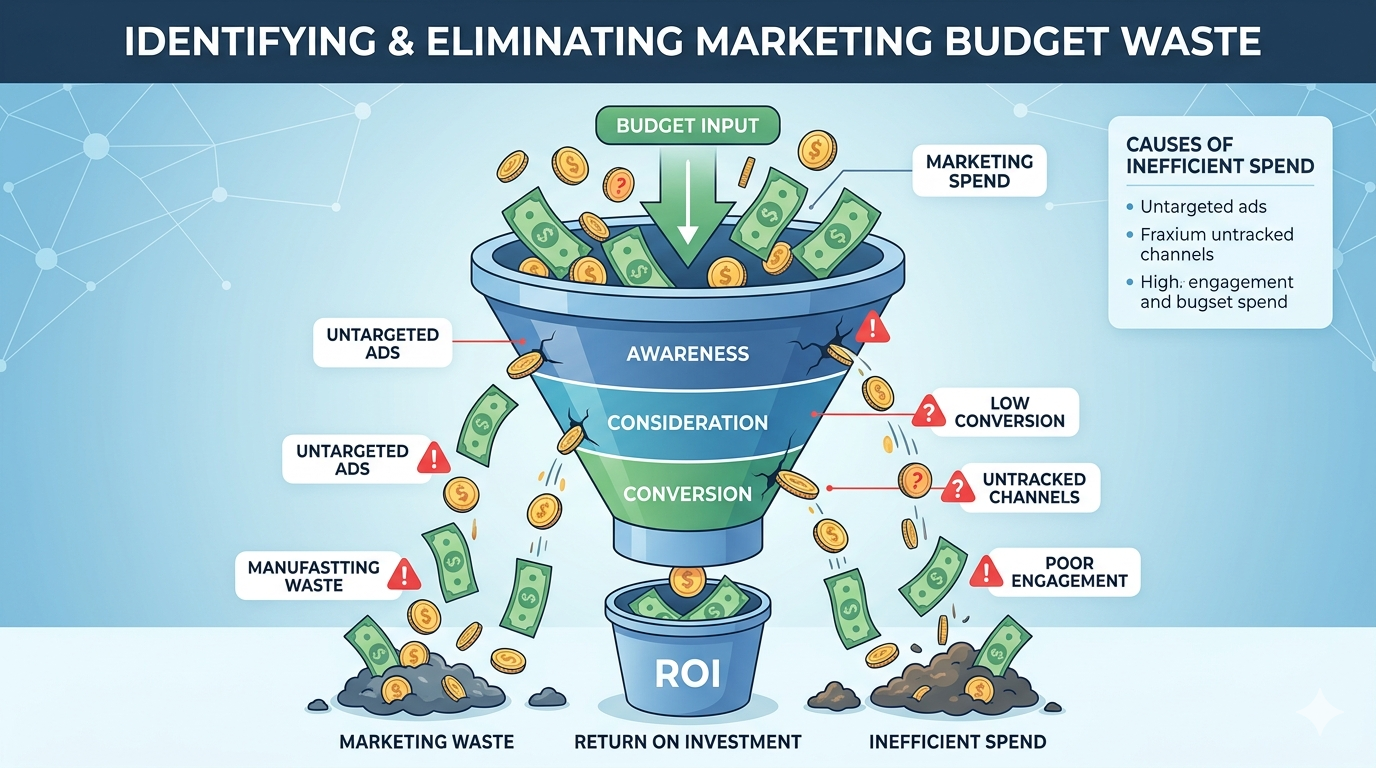
One of the most dangerous things about marketing without data is that it doesn’t fail loudly. There is no immediate signal telling you to stop. No clear moment where everything breaks. Instead, the loss happens quietly, over time.
Budgets are spent. Campaigns keep running. Reports still look “acceptable.” But when you look closer, the truth starts to show.
Low-performing campaigns are allowed to continue simply because no one can clearly prove they are underperforming. At the same time, high-performing campaigns are often underfunded, not because they lack potential, but because their impact is not fully visible.
This creates an imbalance. Money flows into activities that feel familiar, not into what actually works. Teams continue to invest in channels they are comfortable with, rather than channels that deliver results. Over time, this compounds.
What could have been a high-return strategy turns into average performance? What could have been growth becomes stagnation?
And the most concerning part is this. The business may not even realize that it is losing efficiency. Because without data, there is nothing to compare against. No benchmark. No clarity. No signal that something better was possible.
3. Decisions Become Opinion-Based
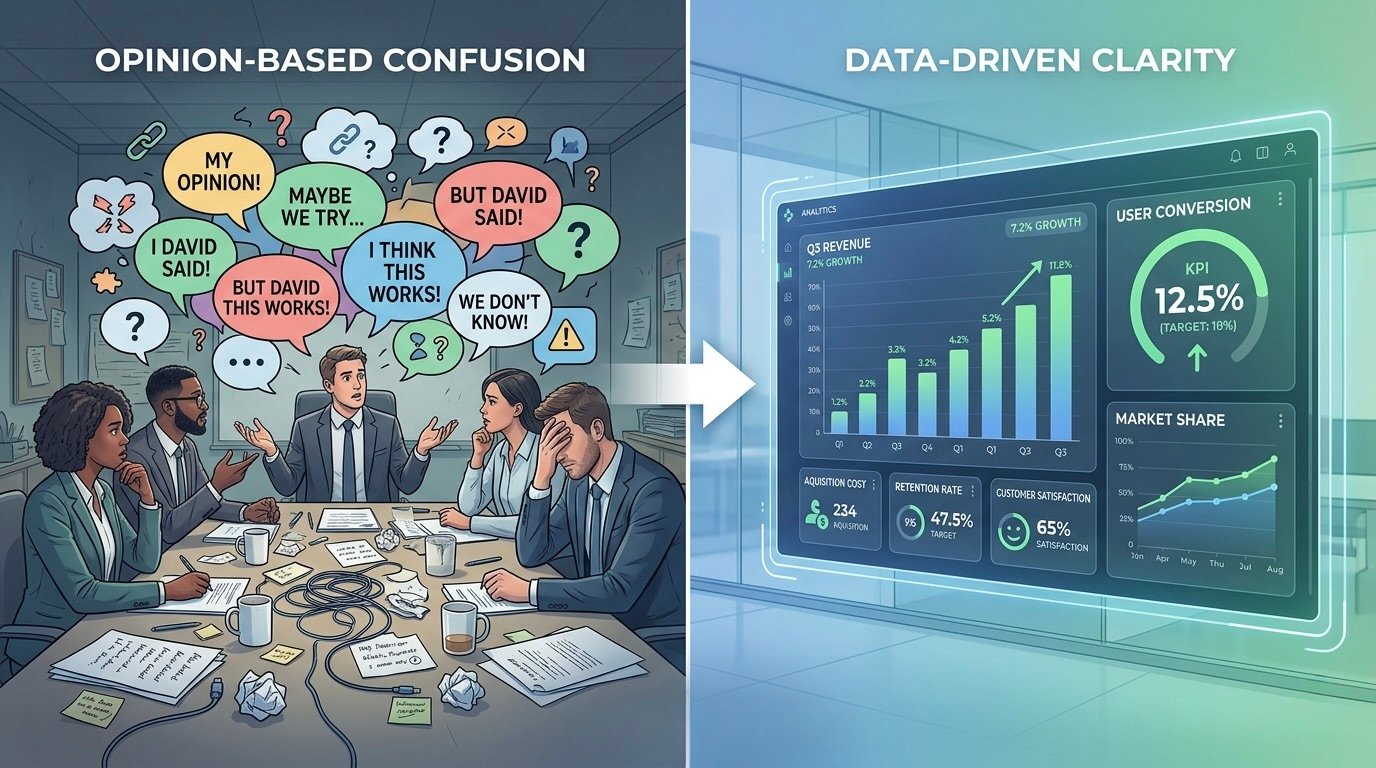
When data is missing, something else takes its place. It is opinion. In many organizations, this is where marketing slowly starts to drift away from performance and closer to internal influence. Campaign directions are decided based on preference. Creative choices are approved based on personal taste. Strategies are shaped by hierarchy rather than insight.
The conversation shifts from “What is working?” to “What do we think will work?”
At that point, marketing is no longer driven by the market. It is driven by internal assumptions. This creates inconsistency. One campaign goes in one direction. The next goes in another. There is no clear learning, no accumulation of insight, no evolution of strategy. Every new campaign starts from zero. Data changes that completely. It removes bias from the conversation. It brings focus back to the customer. It allows decisions to be grounded in reality, not perception.
And most importantly, it creates alignment. Because when everyone is looking at the same numbers, the conversation becomes clearer, faster, and more objective.
What Data-Driven Marketing Really Means
A data driven marketing strategy is not just about dashboards or reports. Data-driven marketing is often misunderstood. For many businesses, it sounds technical and complex, something that lives inside dashboards, reports, or analytics tools. But in reality, it is not about tools. It is about clarity. A true data driven marketing strategy is the ability to understand what is happening in your marketing, why it is happening, and what to do next with confidence.
Marketing without data usually focuses on activity. Teams look at how many campaigns were launched, how much content was produced, and how many ads are running. It creates the feeling of progress, because being busy feels like moving forward. But data shifts that perspective. Instead of asking what has been done, it asks what actually worked. Did the campaign bring the right audience? Did that audience take action? Did that action lead to real business results? This is where marketing analytics becomes meaningful, because it connects effort to outcome. Once that connection is clear, marketing is no longer about doing more, but about doing what matters.
|
Marketing Without Data |
Data-Driven Marketing |
|
Focus on activity (campaigns, posts) |
Focus on outcomes (conversion, revenue) |
|
Decisions based on assumption |
Decisions based on insights |
|
Success measured by reach |
Success measured by ROI |
|
Repeated actions without learning |
Continuous optimization |
In a data-driven environment, decisions are no longer random. Every campaign begins with a clear objective, every channel is selected with intention, and every message is built on real customer insights. Over time, patterns begin to appear. You start to see which audience responds more, which creative drives conversion, and which channel delivers better efficiency. Just as importantly, you also see what does not work. This changes the nature of confidence. It is no longer based on assumption or experience alone, but on evidence.
Another important shift happens in how results are treated. In many businesses, campaigns end with a report, and then everything moves on. But within a data driven marketing strategy, results are not the end. They are the starting point. Every campaign becomes part of a continuous learning process. Through consistent campaign performance tracking, insights begin to build over time. You start to understand where users drop off, which messaging performs stronger, and which segments convert better. These insights lead to action. Budgets are adjusted, creatives are refined, and strategies are improved. Small changes, when done consistently, create meaningful growth.
Ultimately, data connects marketing to business impact. When the right marketing KPIs are in place, marketing is no longer measured by visibility alone. It becomes measurable in terms of cost, value, and return. You understand how much it costs to acquire a customer, how valuable that customer is over time, and whether your campaigns are truly driving results. At this stage, marketing shifts from being a support function to becoming a growth function. Because decisions are no longer based on assumptions, but on data that leads to clear and confident action.
Key Metrics Every Marketer Must Track
When marketing becomes data-driven, the next challenge is knowing what to focus on. Because not all data is useful. In fact, having too much data without direction can be just as dangerous as having none. The goal is not to track everything, but to understand what actually drives business performance.
This is where the right marketing KPIs begin to matter. They act as a filter, helping you separate noise from insight. Instead of being distracted by surface-level numbers, you start focusing on metrics that reflect real impact.
One of the most important is customer acquisition cost. It answers a simple but critical question. How much are you spending to gain one customer? Without this clarity, growth can look impressive on the surface while silently becoming unsustainable underneath. When acquisition cost is too high, even strong campaigns can lead to long-term loss.
At the same time, customer lifetime value brings a longer perspective. It shifts the focus from one-time transactions to ongoing relationships. A customer is no longer just a conversion, but a source of continuous value over time. When you begin to compare lifetime value against acquisition cost, the real health of your marketing becomes visible.
Conversion rate adds another layer of understanding. It shows how effectively your marketing turns interest into action. You may be driving strong traffic, but if users are not converting, something in the journey is not working. It could be the message, the offer, or the experience itself. Data helps you identify where that gap exists.
Retention then completes the picture. Acquiring users is only the beginning. What matters more is whether they stay. A strong retention rate often signals that your product, service, and experience are aligned with customer expectations. It also means your future growth becomes more efficient, because returning customers cost less than new ones.
KPI Relationship Overview
|
Metric |
What It Tells You |
Why It Matters |
|
Customer Acquisition Cost (CAC) |
Cost to acquire one customer |
Ensures sustainable growth |
|
Customer Lifetime Value (CLV) |
Total value from a customer over time |
Measures long-term profitability |
|
Conversion Rate |
% of users taking action |
Identifies funnel effectiveness |
|
Retention Rate |
% of returning customers |
Indicates loyalty and product-market fit |
|
Return on Investment (ROI) |
Revenue vs marketing spends |
Shows overall campaign success |
When these metrics are viewed together, they tell a complete story. You begin to see not just what is happening, but why it is happening. A campaign may drive strong conversions, but if acquisition cost is too high, it may not be worth scaling. Another campaign may bring fewer users, but higher lifetime value, making it more valuable in the long run.
This is the difference between looking at isolated numbers and understanding a system. A data driven marketing strategy does not treat metrics as separate indicators. It connects them, creating a clear picture of performance across the entire customer journey.
Over time, these insights shape better decisions. Budgets become more focused. Campaigns become more targeted. Messaging becomes more relevant. Instead of reacting to results, you begin to anticipate them.
And this is where marketing starts to mature. Not because there is more data, but because the right data is being understood, connected, and used with intention.
From Data to Decisions: The Real Shift
Collecting data is easy. Most teams already have access to dashboards, reports, and performance numbers. But having data is not the same as using it. The real shift happens when data begins to influence decisions, not just describe outcomes.
In many businesses, data is still treated as a reporting tool. Campaigns are launched, results are collected, and performance is reviewed at the end. The numbers are presented, sometimes discussed, and then the next campaign begins. There is movement, but very little change. Data exists, but it does not shape direction.
A true data driven marketing strategy works differently. It brings data into the decision-making process at every stage. Before a campaign begins, data helps define the objective. During the campaign, it guides adjustments. After the campaign, it informs what should happen next. Instead of being an afterthought, data becomes part of the flow.
This changes how marketing operates on a daily level. Decisions are no longer delayed until the end of a campaign. They happen continuously. If a certain audience is not responding, it is identified early. If a creative is performing better, it is scaled quickly. If a channel is underperforming, budget is reallocated before losses grow. Through consistent campaign performance tracking, action becomes faster and more precise.
|
Stage |
What Happens Without Data |
What Happens With Data |
|
Planning |
Based on assumption |
Based on past performance and insights |
|
Execution |
Fixed and unchanged |
Flexible and optimized in real time |
|
Evaluation |
End-of-campaign review |
Continuous performance monitoring |
|
Decision |
Delayed and unclear |
Immediate and evidence-based |
Another important shift is how teams think. When decisions are guided by data, conversations change. Instead of debating opinions, teams begin to align around evidence. Questions become more focused. What is driving conversion? Where are users dropping off? Which segment is more valuable? These are not abstract discussions. They are grounded in marketing analytics and real customer insights.
Over time, this builds a culture of learning. Every campaign becomes part of a larger system, not an isolated effort. Insights accumulate, patterns become clearer, and decisions become more confident. Small improvements are made consistently, and those improvements begin to compound.
This is where the real transformation happens. Marketing stops reacting to results and starts shaping them. Instead of waiting to see what happens, teams begin to predict outcomes based on patterns they already understand. Decisions become faster, but also more accurate.
At this stage, data is no longer just supporting marketing. It is guiding it.
And that is the difference between running campaigns and building a system that consistently improves, adapts, and grows.
Turning Data into Action: A Practical Flow
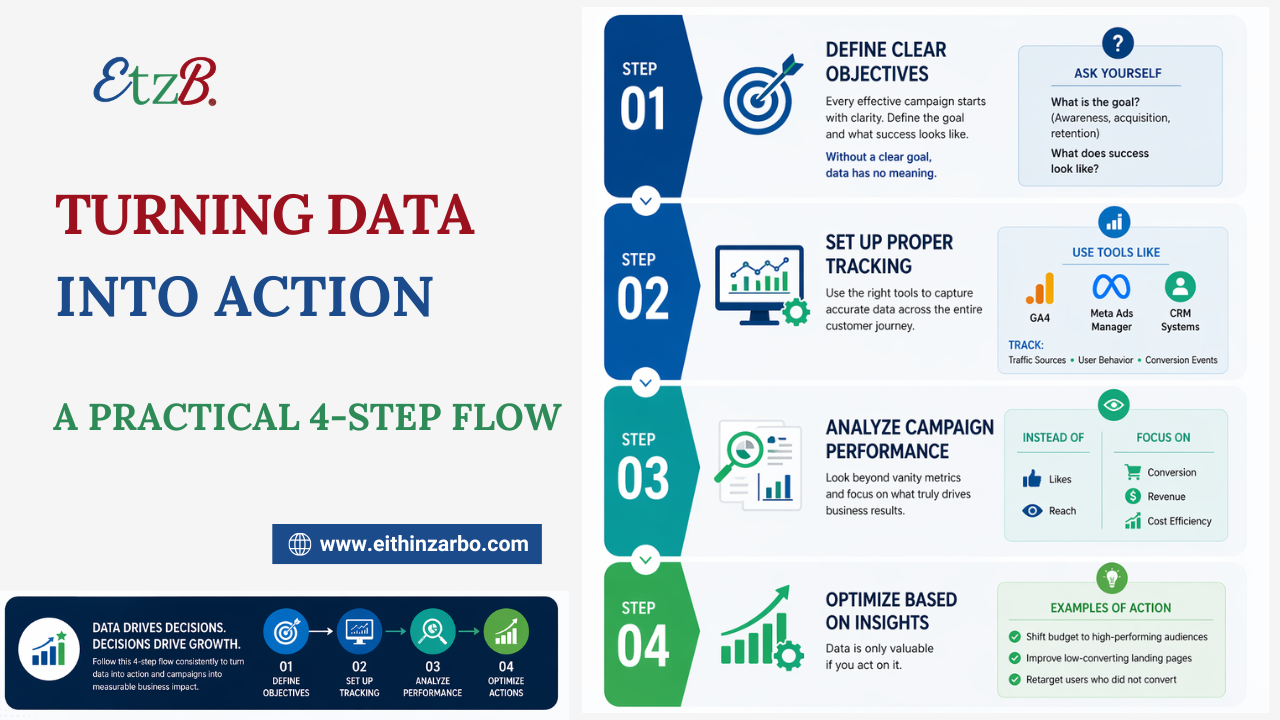
Every effective campaign starts with clarity. Before any budget is spent or any content is created, the direction must be defined. What is the real goal of this campaign? Is it to build awareness, acquire new users, or retain existing customers? More importantly, what does success actually look like? Without this clarity, data becomes noise. Numbers may exist, but they do not guide anything. When the objective is clear, every metric that follows begins to have meaning.
Once the objective is defined, the next step is making sure every action can be tracked. This is where many campaigns fail quietly. Marketing is executed, but the connection between effort and result is never fully captured. With the right setup across tools like GA4, ad platforms, and CRM systems, visibility begins to form. You start to see where traffic is coming from, how users behave, and where they convert or drop off. This is where a data driven marketing strategy begins to take shape, not through tools alone, but through the ability to see the full journey.
With tracking in place, performance can finally be understood. But understanding requires focus. Many marketers still get distracted by surface-level metrics that look impressive but do not drive business results. Likes and reach may indicate visibility, but they do not guarantee impact. What matters is whether users take action, whether revenue is generated, and whether the cost is justified. This is where marketing analytics becomes valuable, helping shift attention from what looks good to what actually performs.
The final step is where real growth happens. Data on its own does nothing unless it leads to action. Insights must be translated into decisions. Budgets are moved toward high-performing segments, weak conversion points are improved, and missed opportunities are retargeted. Through continuous campaign performance tracking, small changes are made consistently. Over time, these adjustments build momentum, turning isolated campaigns into a system that learns, improves, and delivers stronger results with each iteration.
From Guessing to Growth
Marketing rarely fails because people are not working hard enough. It fails because there is no clear direction behind the effort. Campaigns are launched, content is produced, budgets are spent, yet the outcome remains uncertain. Not because the ideas are wrong, but because they are not grounded in data.
This is where the shift begins. When marketing moves from assumption to understanding, everything changes. A data driven marketing strategy does not remove creativity. It gives it direction. It ensures that every idea, every message, and every campaign is supported by real customer insights and measurable outcomes. Instead of hoping something works, you begin to see why it works.
Over time, this creates a system. One where marketing analytics is not just reporting the past, but guiding the future. Where campaign performance tracking leads to faster decisions, smarter budget allocation, and continuous improvement. Small optimizations begin to compound, turning individual campaigns into a consistent growth engine.
This is the difference between activity and impact. Between running campaigns and building a strategy. When the right marketing KPIs are in place and connected to business outcomes, marketing becomes accountable, measurable, and valuable. It no longer operates on guesswork. It operates on clarity.
And in today’s environment, clarity is what drives growth.
 Ei Thinzar Bo